From Tester to AI Operator: what I'm bringing to Bydgoszcz
If AI can write code, what is left for testers? The case I am taking to the Sii x ŁuczniczQA meetup in Bydgoszcz: code is cheap, judgment is the bottleneck.
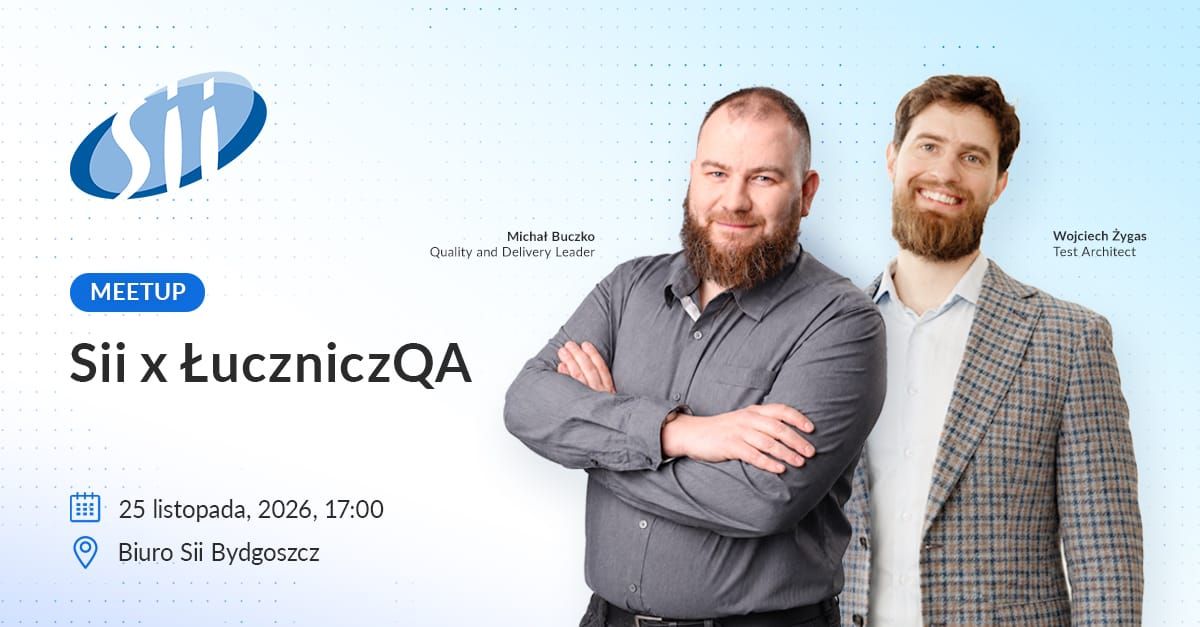
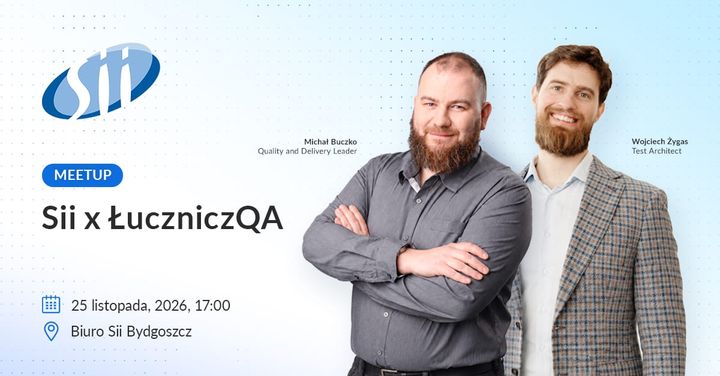
If AI can write code, what is left for testers? Next Wednesday, 25 November, I'm taking that question to the Sii x ŁuczniczQA meetup in Bydgoszcz. The talk is in Polish, but the argument travels, so here it is in English.
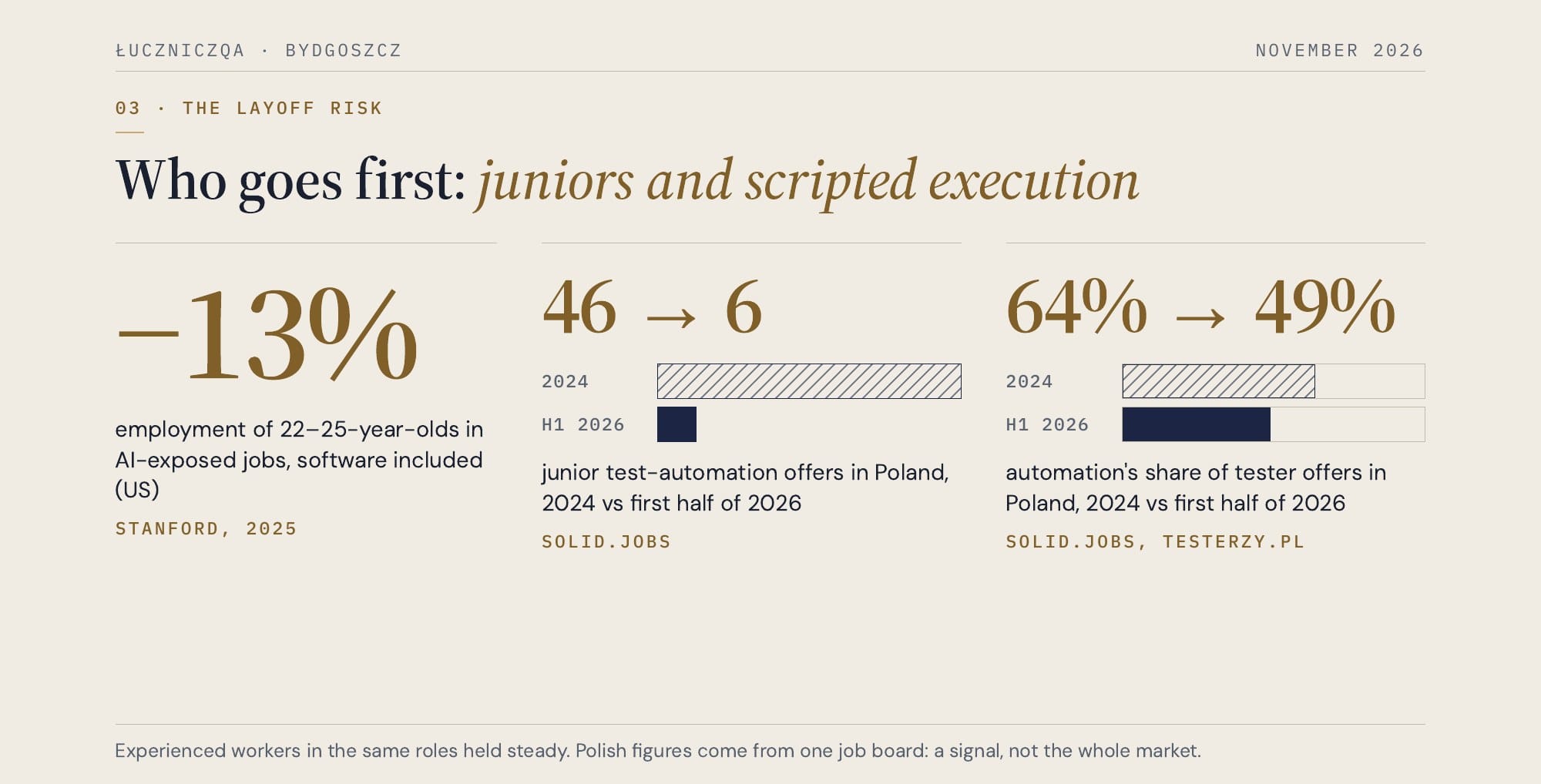
What the job market is already saying
Layoff data from the US, Europe and Poland points in one direction. Executional work and junior roles go first. Judgment holds. That is uncomfortable for a profession that has spent years being measured by test cases executed. It is also an opening, because judgment is exactly what good testers build over a career.
The experiment I ran on myself
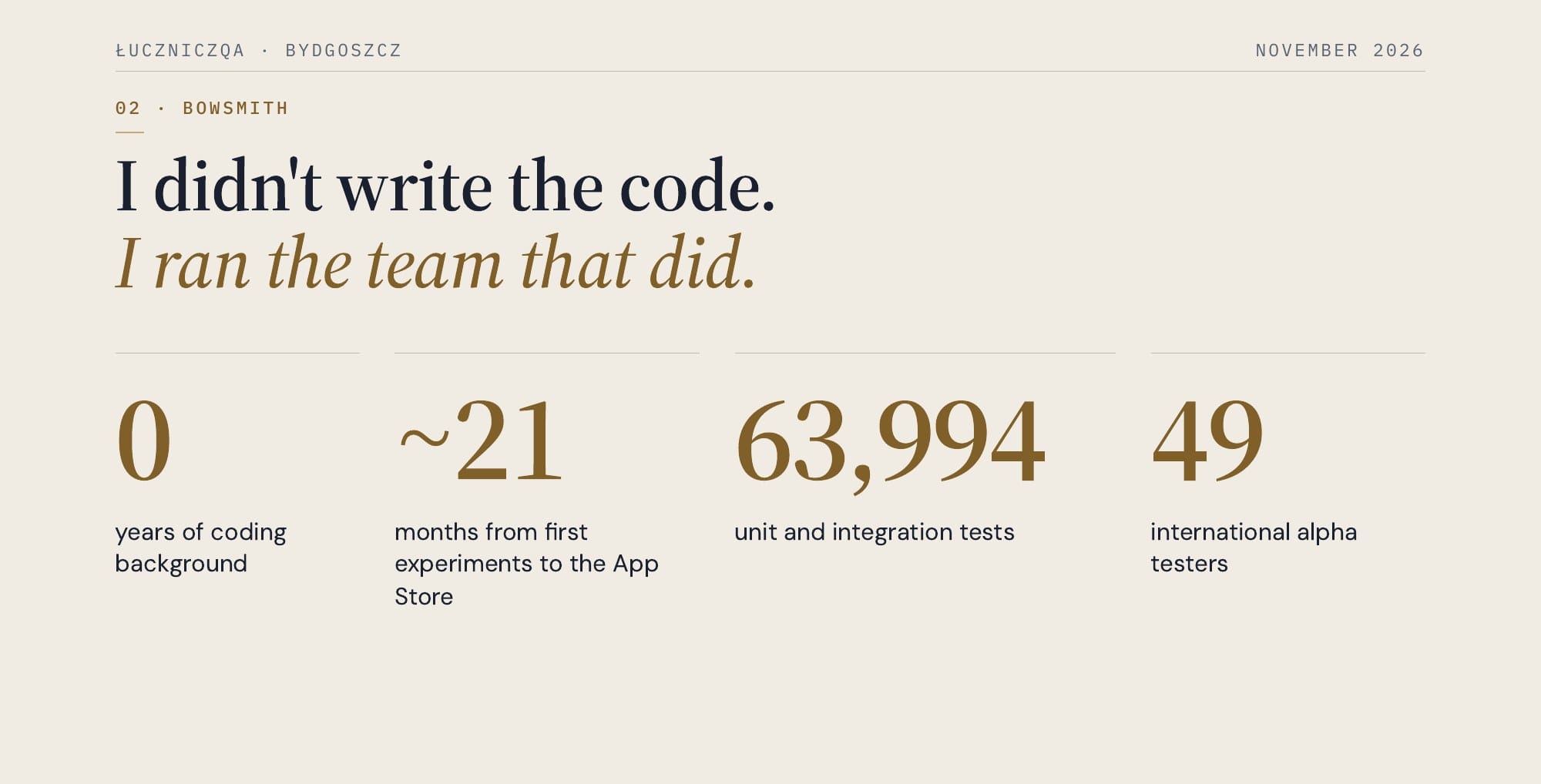
I wanted evidence, not opinions. So I built and shipped BowSmith, a production iOS app, without knowing Swift. What I did have was QA experience, test frameworks and the basics of architecture. I ran a team of AI agents as the project's product owner, backed by roughly 64,000 automated tests, CI pipelines and quality gates.
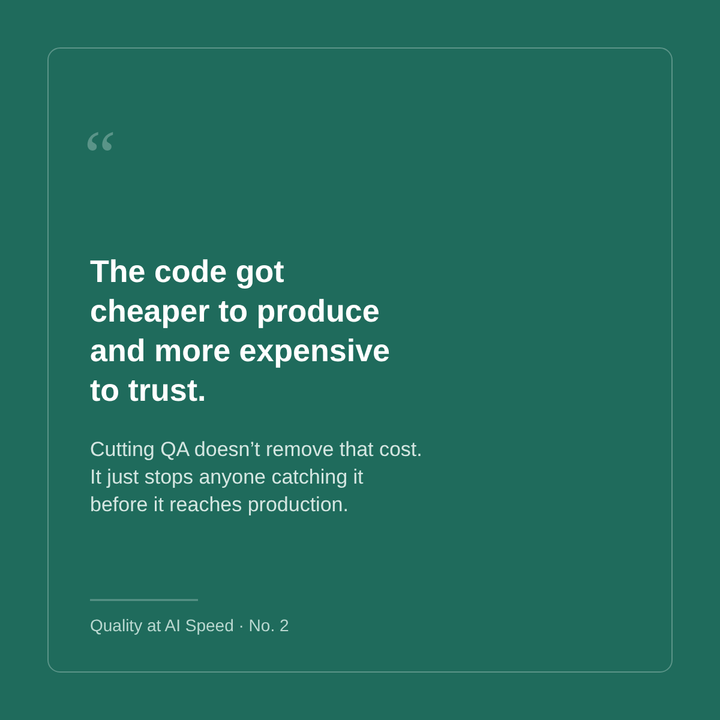
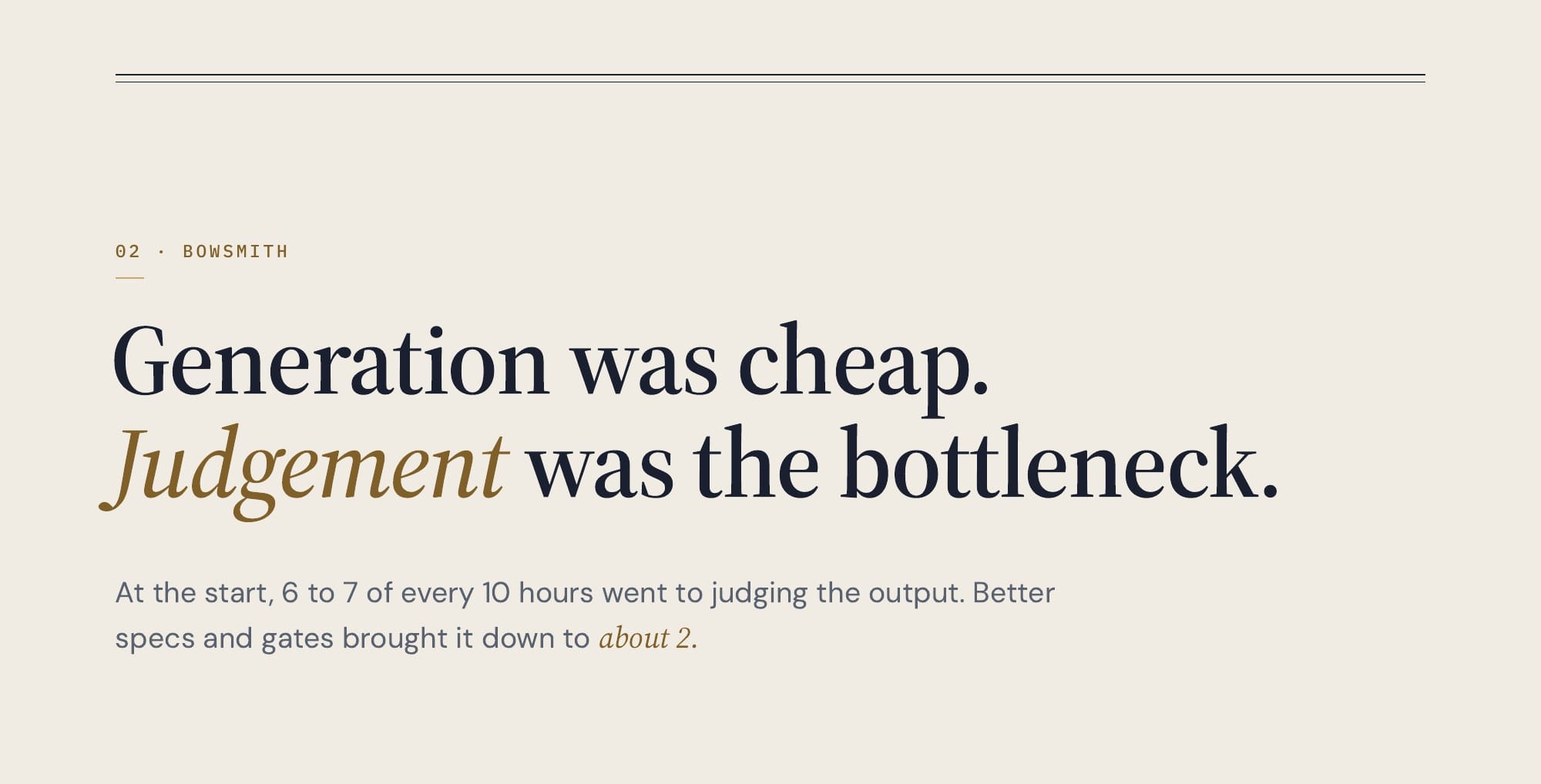
The result surprised me less than the lesson. Code turned out to be cheap. The bottleneck was evaluating it.
What agents don't have
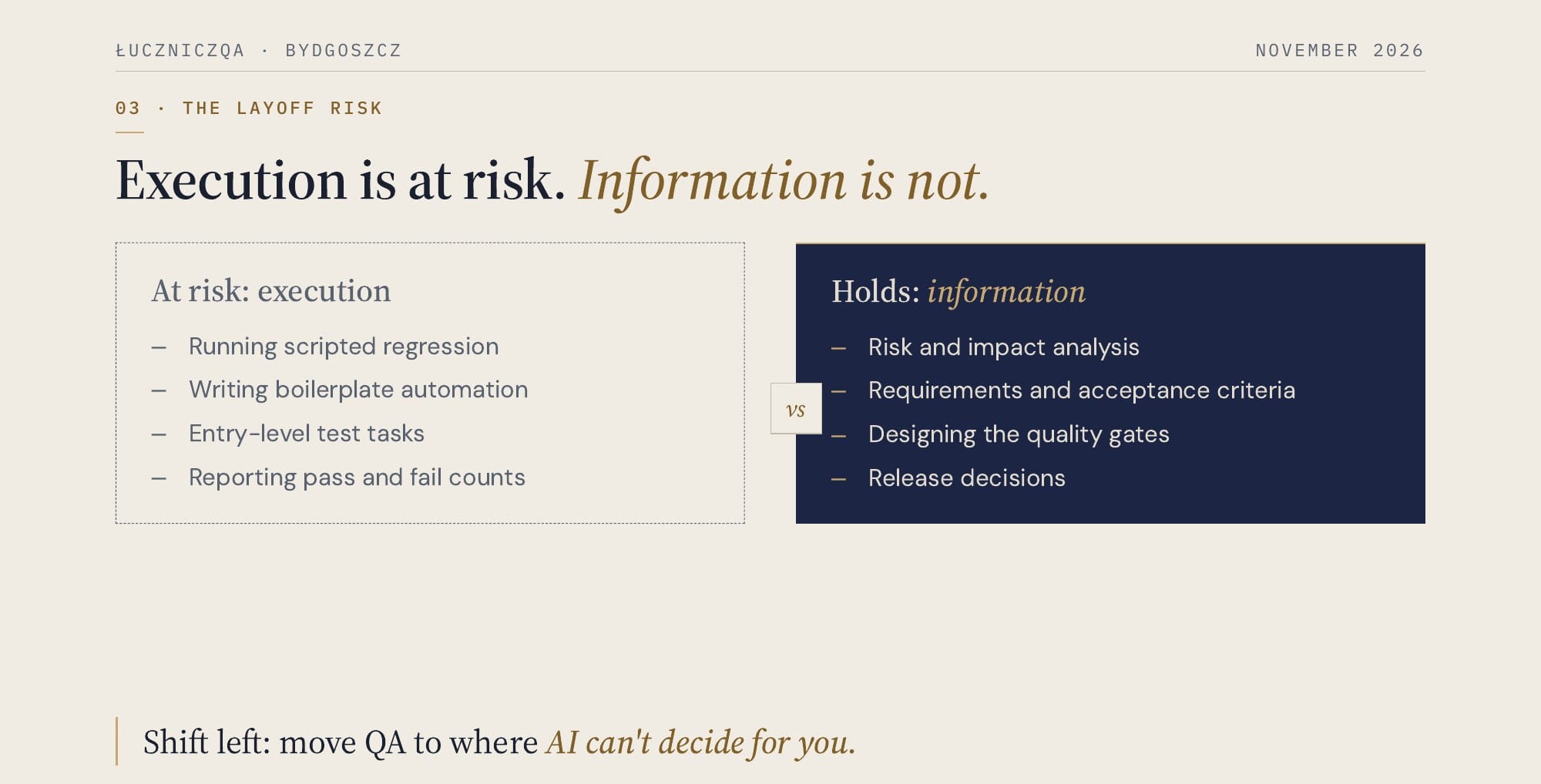
Agents are fast. What they lack is a sense of risk, of impact and of business context. They will happily produce a thousand green checks for the wrong thing. Deciding what is worth checking, and when a result is good enough to trust, stayed with me the whole way. That is the tester's craft, moved one level up.
Where to grow from here
In the talk I map a career path from tester to AI operator. Three parts:
- The advantages QA specialists already have and agents lack: risk, impact and business context.
- The areas worth investing in now: architecture and spec-driven development.
- Practical tools from my chapter “Quality at Machine Speed” in the AI Transformation anthology, which keep AI-speed delivery trustworthy.
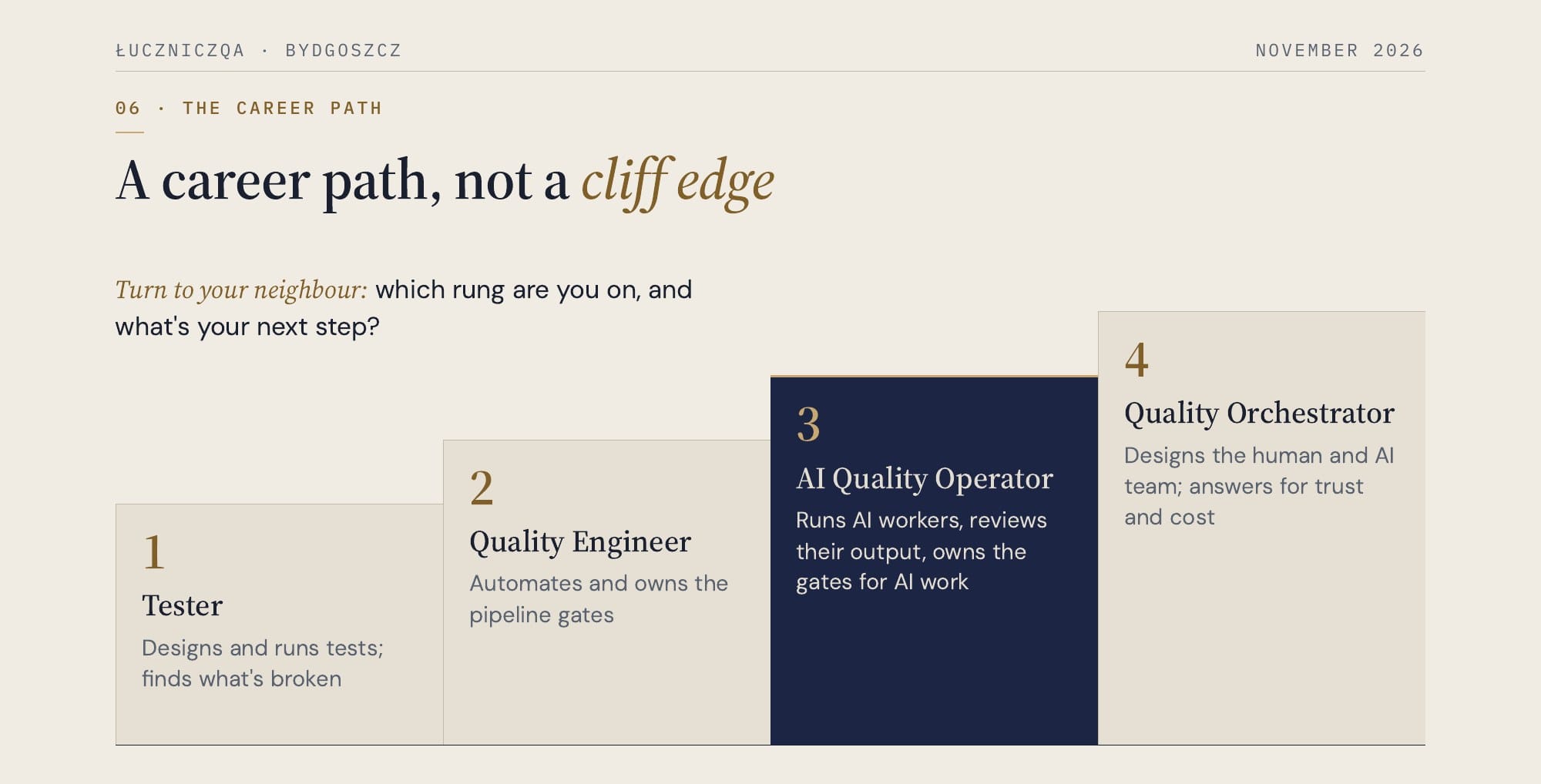
Our experience already covers the new bottleneck. We just have to reach for it.
The evening
Wojciech Żygas, Test Architect and author of the first training in Poland on evaluating and testing AI systems, opens at 17:00. His talk tackles how to deliver an AI feature that actually works, including the uncomfortable fact that it can stop working even if it worked on delivery day. I follow at 18:15. Pizza and networking from 19:15.
Sii office, pl. Kościeleckich 3, Bydgoszcz. Registration: sii.pl/wydarzenia/sii-x-luczniczqa-2.
If you can't make it, I'll publish a recap here afterwards. And if you are making the same shift in your own team, I'd like to hear where it landed for you.