CAST 2026: the conference around the talk
I've written about what the CAST26 room did to my talk. This is the other recap: three days in Cocoa Beach, the format that makes CAST different, the sessions I took home, and the people who made it worth the trip.
I've already written two posts about CAST 2026. Open season is about what the room did to my talk. The arc ended on a stage is about what the room did to eighteen months of writing. Both are about my claims under pressure.
This one is the recap I'd write about any conference I went to: where it was, how it works, what I took home from other people's sessions, and who I want to thank. Two months later, that part deserves its own post.
Three days in Cocoa Beach
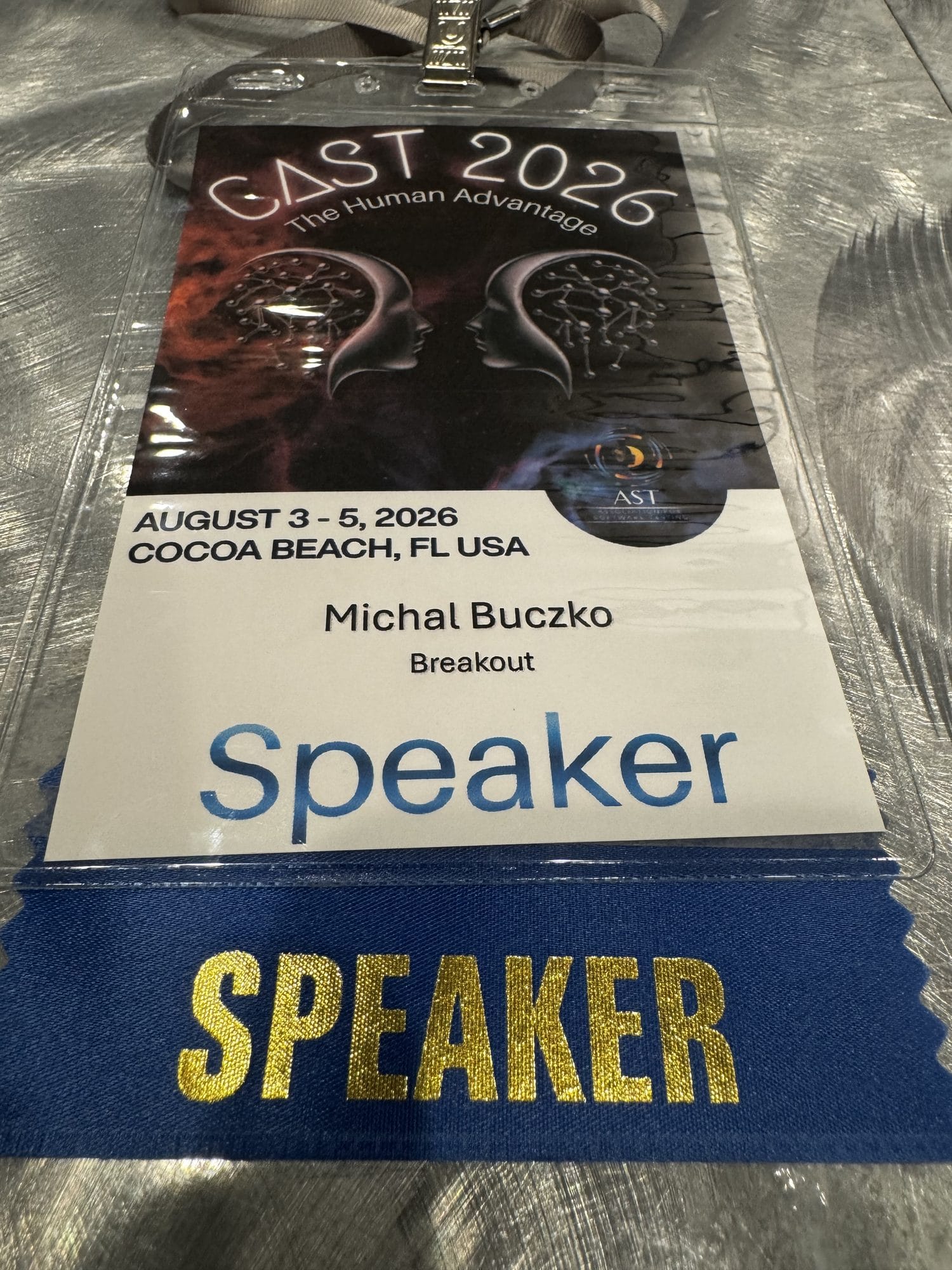
CAST 2026, themed "The Human Advantage", ran from 3 to 5 August in Cocoa Beach, Florida. Tutorials on the 3rd, the conference itself on the 4th and 5th.
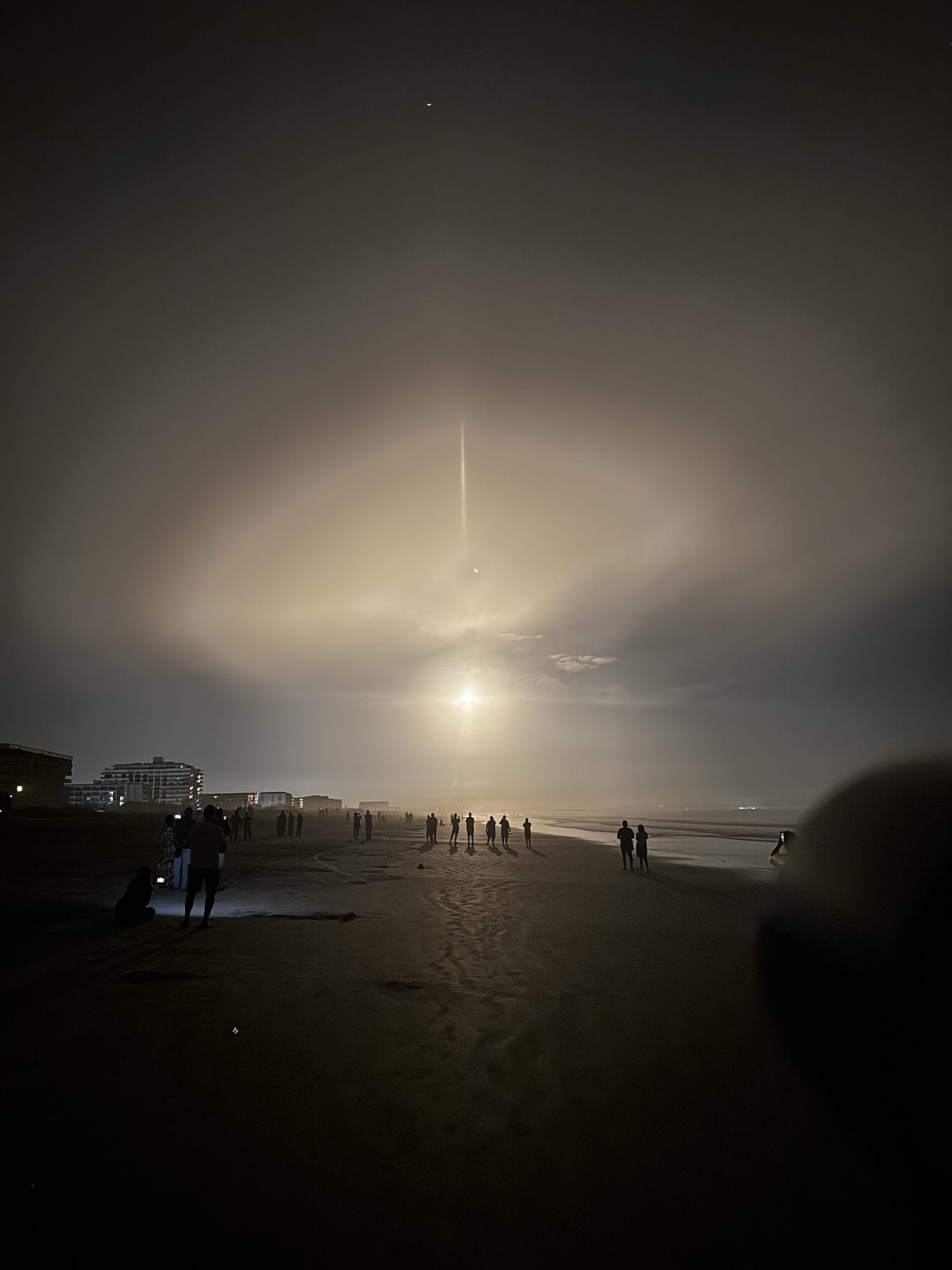
CAST came straight after BowFest. From Superior we drove to Minneapolis, flew to Miami for a few days, and then drove to Cocoa Beach. The place had its own pull for a tester who likes systems that have to work first time: a SpaceX launch was planned during the conference, and we watched it go up from the beach at night. We made it to the Kennedy Space Center too, but that is a different blog.
The tutorial day ran full-day workshops, among them Paul Holland and Huib Schoots on "How to Test Effectively – A Deep Dive into Taking Testing Seriously". I didn't stay in one room. I moved between several tutorials for short stretches, partly to learn and partly to see how a good full-day tutorial is built, because I'd like to run one myself one day. The one I loved was Justin Bench's "We are the Proof of Concept: What One Director and an AI Staff Can Actually Achieve".
A format that won't let you finish
Most conferences end a talk with applause and two polite questions. CAST ends it with open season. You present, and then the room takes you apart: questions, counter-examples, people who ran your experiment and got a different result.
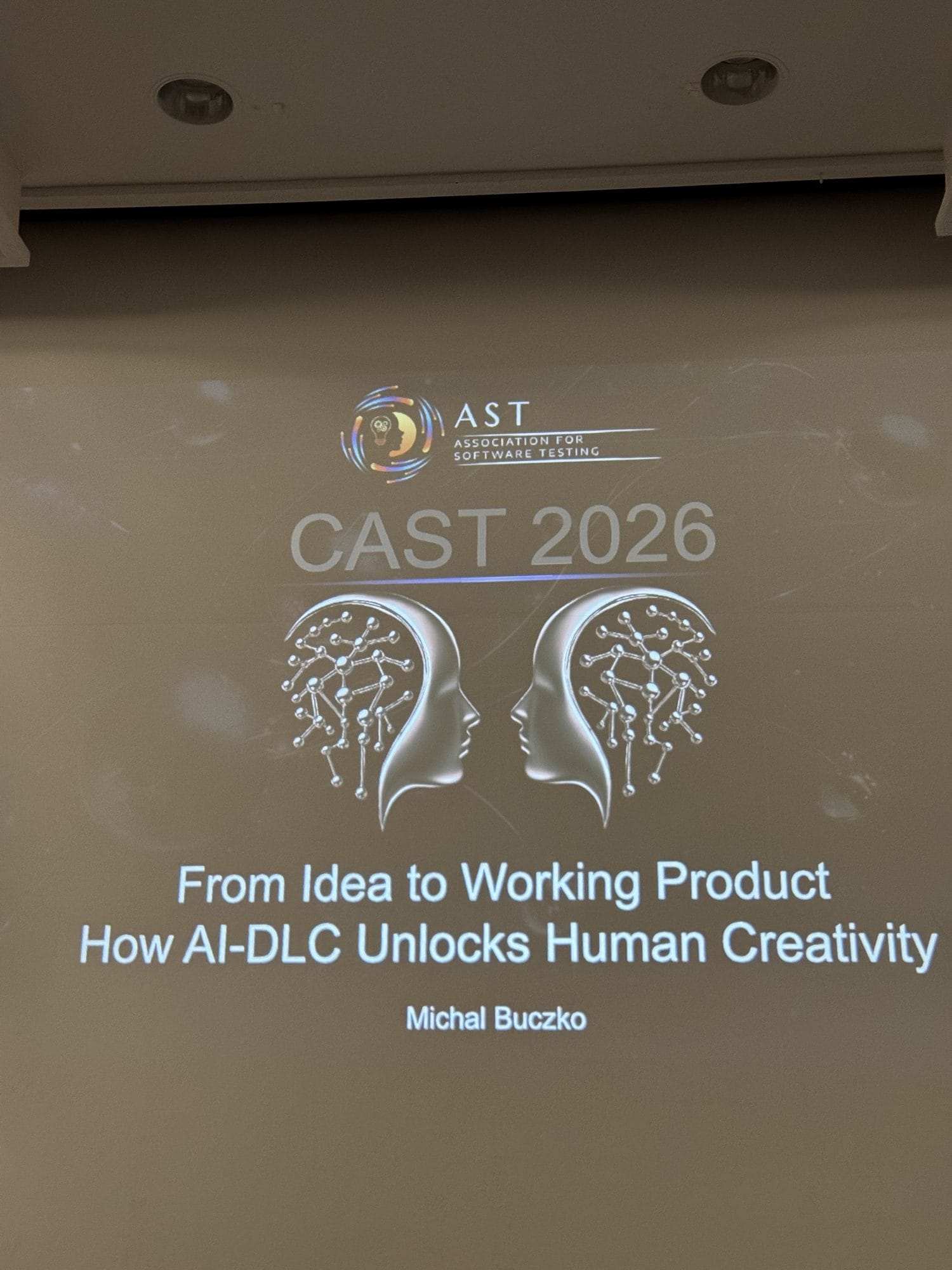
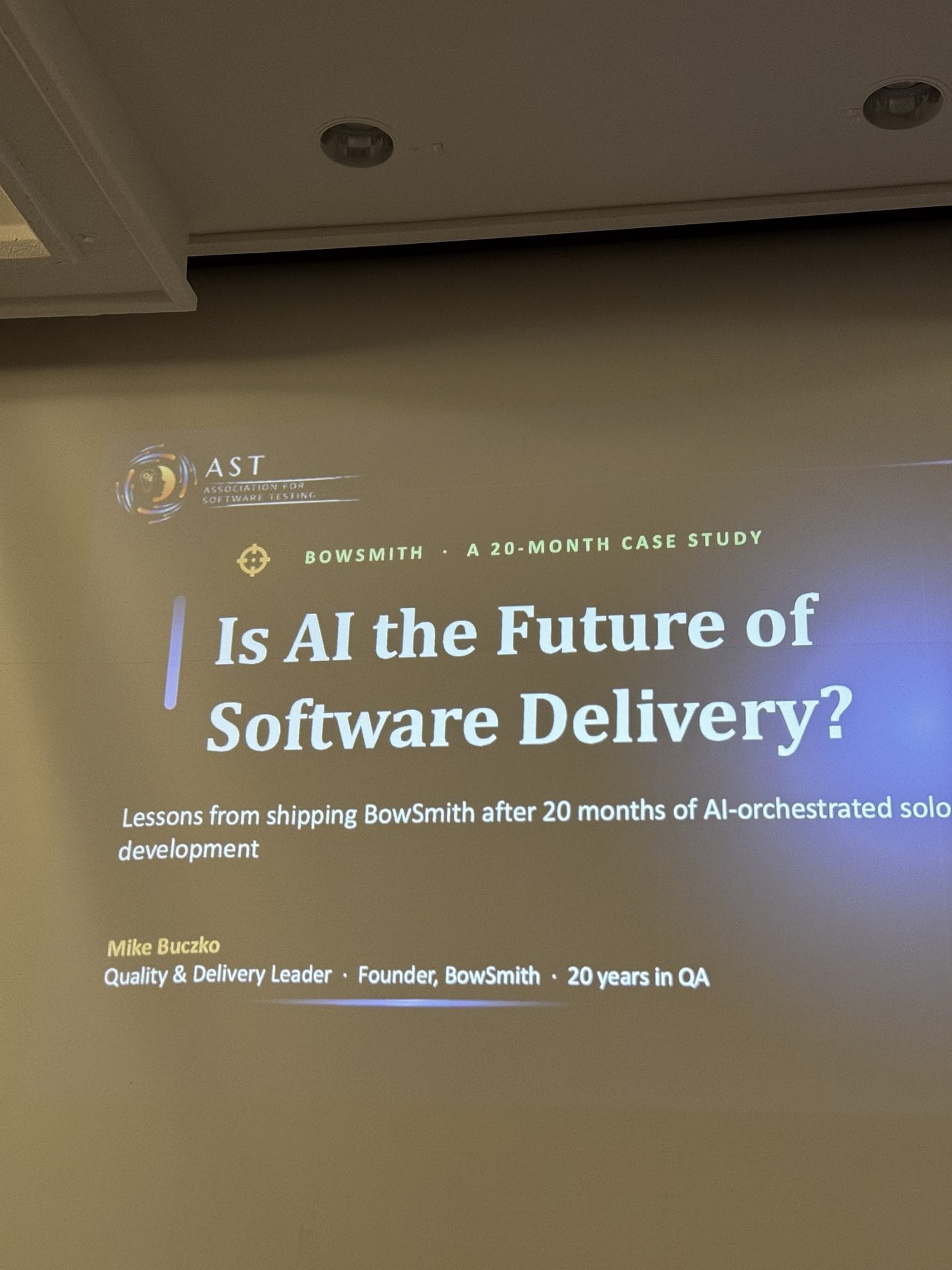
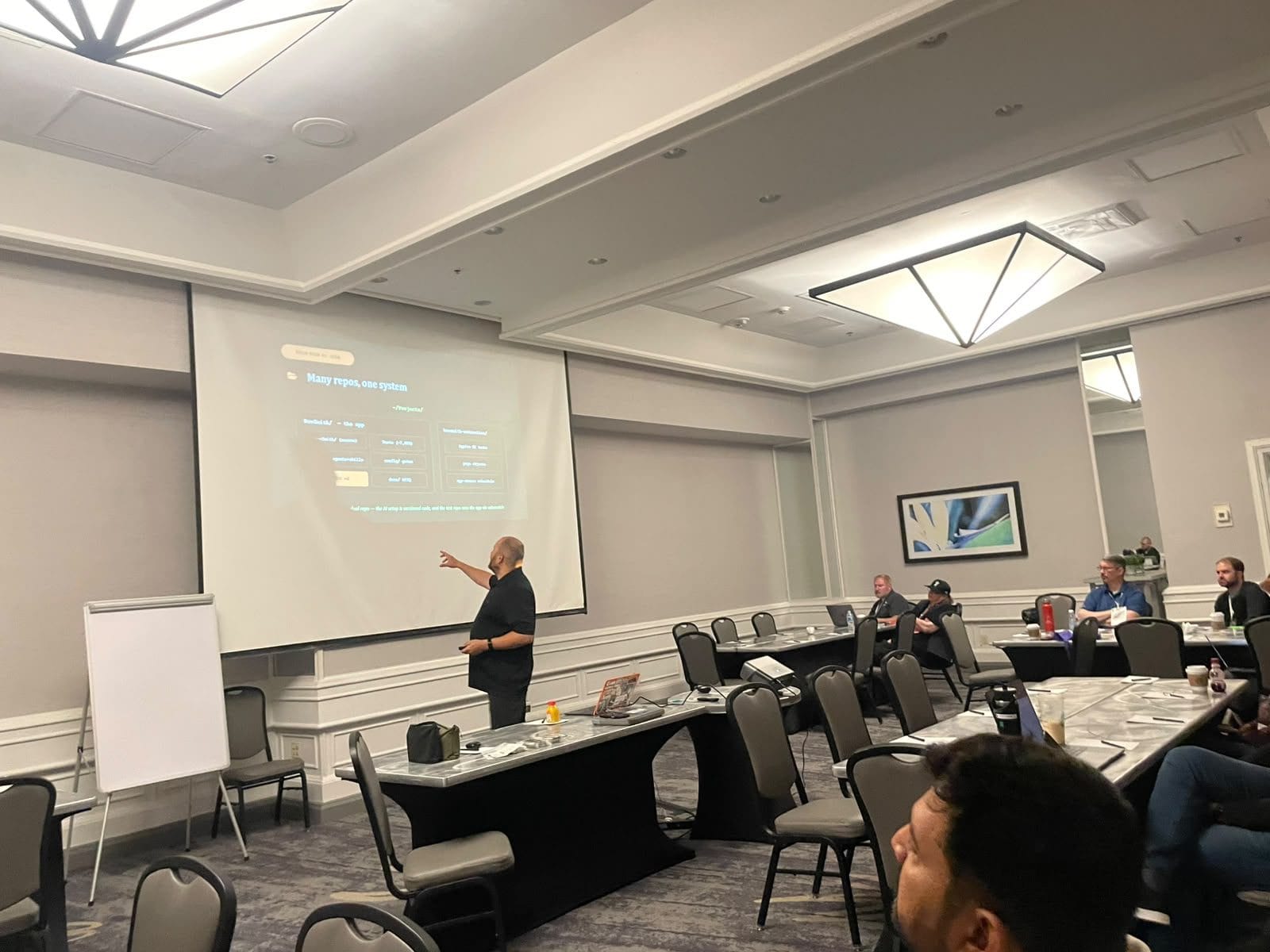
My session, "From Idea to Working Product: How AI-DLC Unlocks Human Creativity", was a 90-minute breakout in the Sawgrass room on the morning of 4 August. The deck asked "Is AI the future of software delivery?" and answered with lessons from shipping BowSmith after 20 months of AI-orchestrated solo development: orchestration, model mixing and the RPIQ loop. I won't repeat what happened in open season here; that is what the two earlier posts are for.
What I want to say about the format is simpler. It changes how you listen to everyone else's talk too. When you know the room will push back, you stop collecting slogans and start collecting claims you'd be willing to defend. That is a better way to attend a conference, and I've tried to keep it since.
Two sessions I took home
Matt Simons gave a forward look at frontends and at agents becoming a commodity for ordinary people, not only for technical experts. I build orchestration for people who already think in stacks and routing. His framing pointed at the frontier I'm not designing for yet: the non-expert. I've taken that into my own innovation work.
Justin Bench, whose tutorial I mentioned above, runs a lot of experiments on how models actually behave, including self-hosted models. I use cloud models exclusively, so this was territory I had left to someone else. His work is the reason I now treat shaping models, and not only consuming them, as a gap in my own practice.
The hallway track
Some of the most useful material came from between the sessions. One hallway question, "what do you actually lose without Fable?", came up again and again, and turned into a post of its own. Two questions from the room, how anyone can forecast this field and whether the token is even the right unit of account, are still shaping what I write.
Behind all of it is the Association for Software Testing, the community that runs CAST. In my part of Europe, AST is not recognised nearly as much as it deserves to be. That is a gap worth closing. The format, the tutorials, the people it brings together and the seriousness with which it treats testing are its work, and they are why I'd go back.
The overall mood surprised me. There was more appetite for orchestration and multi-model work than I expected. A solid part of the room was past "does AI do anything useful" and into "how do I compose this into something reliable". There were sceptics too, and they had good reasons. A conference that has both in the same room, and a format that makes them talk to each other, is rare.
The check: after your next conference, list the three claims you heard that you'd be willing to defend in front of the speaker. If you can't name three, you collected slogans.
Thank you
Thank you to AST, the CAST organisers and the volunteers who keep that format running, and to everyone who stayed for open season and didn't take my word for it. A special thank you to Dawn Haynes, Conference Chair, and Gwen Iarussi, Program Chair, for the invitation and for all the support on site.
The deck is in the Open season post. If you were in Cocoa Beach too, which session are you still thinking about?